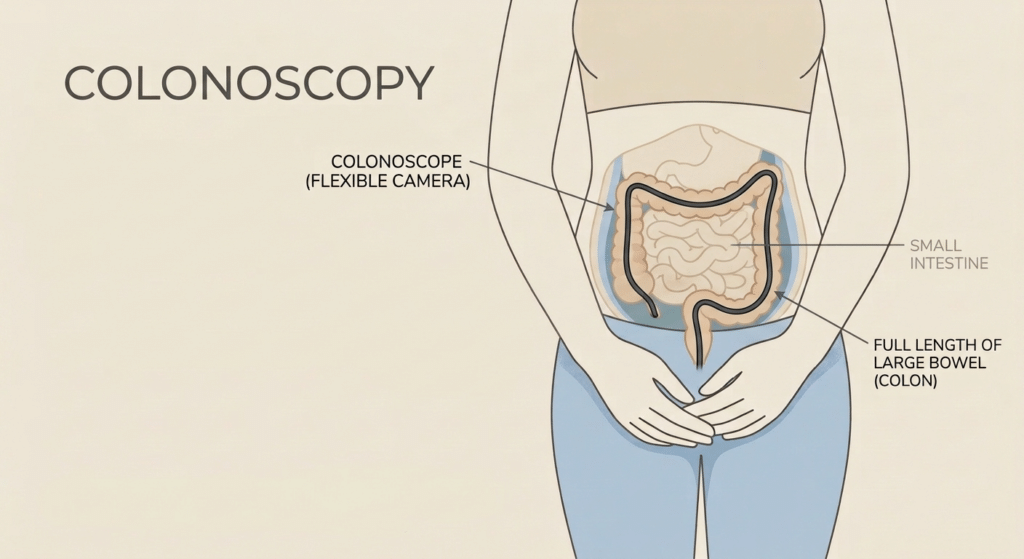
Examination of the large bowel using a flexible camera, used to investigate symptoms, screen for bowel conditions, and remove polyps where appropriate.
PROCEDURES – COLONOSCOPY
What it involves
A colonoscopy allows direct visual examination of the lining of the colon. It may be performed to investigate symptoms such as bleeding or changed bowel habit, for bowel cancer screening, or as follow-up for previous findings such as polyps identified on an earlier examination. The procedure uses a thin, flexible instrument with a camera to examine the entire length of the colon, allowing abnormalities to be identified and, where appropriate, treated in the same session.
Where appropriate, polyps can be removed during the procedure (polypectomy), and other interventions such as injection, coagulation or banding may be performed if clinically indicated. Removing polyps at the time of colonoscopy can help prevent them from developing into bowel cancer over time, which is one of the key benefits of screening colonoscopy. The procedure typically takes between 20 and 45 minutes, though this can vary depending on findings and any interventions performed during the examination.
Dr. Vosloo will explain the findings to you where possible immediately after the procedure, though a full assessment – particularly where biopsies are taken – may only be complete once pathology results are available.
Sedation
Colonoscopy is performed with sedation or anaesthesia to improve comfort. The exact approach depends on your individual assessment by the anaesthetist, taking into account your medical history, current medication, and any previous experience with sedation or anaesthesia. Sedation helps most patients tolerate the procedure with minimal discomfort, and you will be monitored closely throughout, including your heart rate, blood pressure, and oxygen levels. Most patients have little to no memory of the procedure itself once sedated. Please discuss any concerns about sedation, including previous reactions to anaesthesia or any breathing conditions, with the practice ahead of your procedure.
Preparing for surgery
Proper bowel preparation is essential for an accurate examination. You will be given detailed bowel preparation instructions ahead of your procedure – please follow these carefully, as inadequate preparation can affect the quality of the examination and may, in some cases, require the procedure to be repeated.
Preparation typically involves dietary changes in the days beforehand, such as avoiding high-fibre foods, followed by a clear liquid diet and a bowel-clearing solution taken the day before your procedure. Please also inform the practice of any regular medication, particularly blood thinners, anti-inflammatories, or iron supplements, as some may need to be paused or adjusted ahead of time. If you have diabetes or other chronic conditions, please let the practice know so your preparation instructions can be adjusted accordingly.
What to expect afterwards
As sedation can affect judgement and coordination, you will need a responsible adult to take you home and should not drive yourself afterwards. You should also avoid operating machinery, signing important documents, or making significant decisions for the remainder of the day. Findings are usually discussed with you once you have recovered, roughly an hour after the procedure, once the effects of sedation have started to wear off.
If biopsies or polyps are sent for pathology, final results are typically available within about a week, and a follow-up appointment will be arranged to discuss these results and any further treatment or surveillance that may be recommended. Mild bloating, cramping, or wind is common after colonoscopy due to air introduced during the procedure, and usually settles within a day. Please contact the practice if you experience significant abdominal pain, fever, persistent vomiting, or bleeding after your procedure.
For full preparation instructions, see our Endoscopy page.
Day case or hospital admission
This procedure may be performed as a day case or with a short hospital stay, depending on your individual circumstances and the findings at surgery.