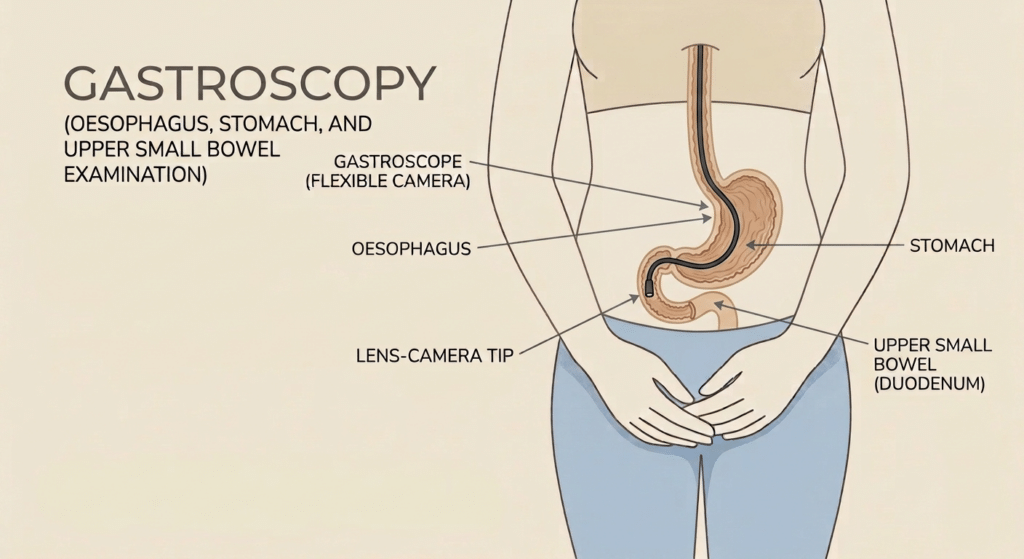
Examination of the oesophagus, stomach and upper small bowel using a flexible camera, used to investigate upper gastrointestinal symptoms.
PROCEDURES – GASTROSCOPY
What it involves
A gastroscopy allows direct visual examination of the upper gastrointestinal tract. It may be used to investigate symptoms such as reflux, difficulty swallowing, upper abdominal pain or bleeding. Biopsies may be taken where indicated, and therapeutic procedures such as injection or coagulation can be performed if required.
Sedation
Gastroscopy is performed with sedation or anaesthesia to improve comfort, based on individual assessment.
Preparing for surgery
You will need to fast before your procedure, specific fasting and medication instructions will be provided beforehand.
What to expect afterwards
You will need a responsible adult to take you home, as sedation affects your ability to drive safely. Findings are generally discussed once you have recovered from sedation. If biopsies are taken, results are usually available within about a week.