
Endoscopy
Dr Wesley A. Vosloo performs gastroscopy and colonoscopy at Mediclinic Midstream. This page covers what to expect, how to prepare, and what happens after your procedure.
ENDOSCOPY
Gastroscopy and Colonoscopy
Gastroscopy and colonoscopy are common procedures used to investigate symptoms, screen for bowel conditions, and treat certain findings at the time of the scope. This page answers practical questions about preparation, sedation and results – please also follow any procedure-specific instructions given to you directly by the practice.
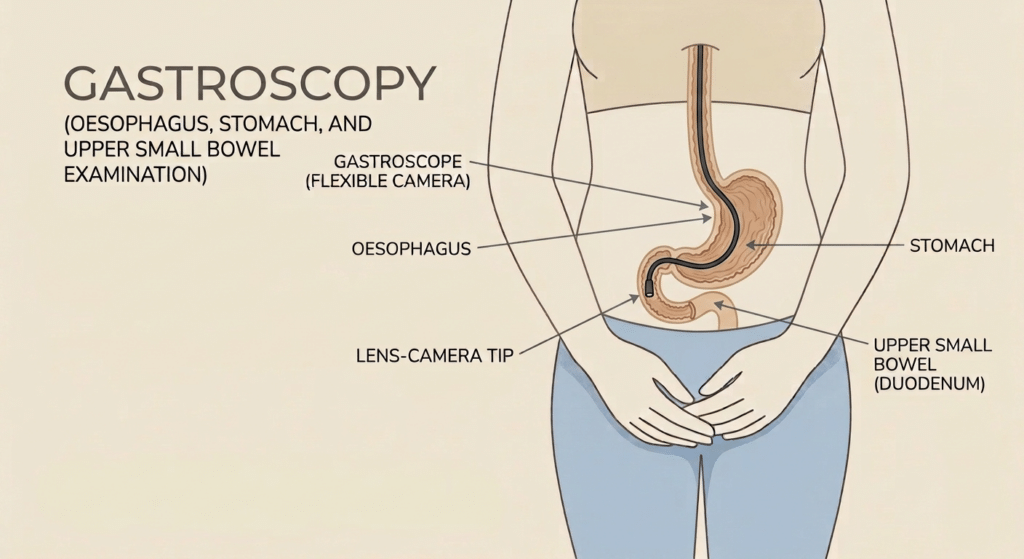
A gastroscopy allows direct visual examination of the upper gastrointestinal tract. It may be used to investigate symptoms such as reflux, difficulty swallowing, upper abdominal pain or bleeding. Biopsies may be taken where indicated, and therapeutic procedures such as injection or coagulation can be performed if required.
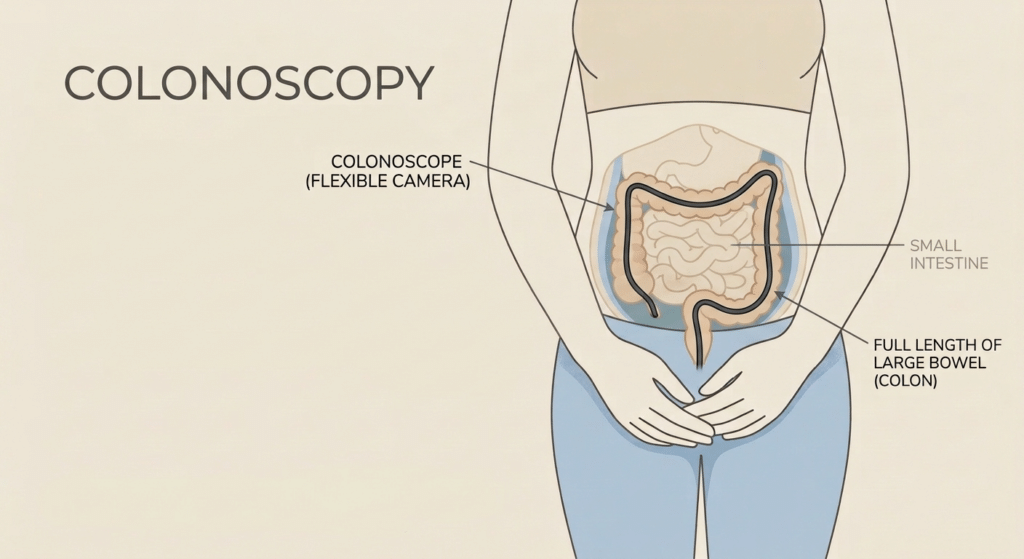
A colonoscopy allows direct visual examination of the lining of the colon. It may be performed to investigate symptoms such as bleeding or changed bowel habit, for bowel cancer screening, or as follow-up for previous findings. Where appropriate, polyps can be removed during the procedure (polypectomy), and other interventions such as injection, coagulation or banding may be performed if clinically indicated.
Colonscopy Procedure Locations
In-rooms endoscopy done at endoscopy suite in within consultation rooms, suite 206 main hospital Mediclinic Midstream Hospital. Where indicated endoscopy may be performed in theatre depending on the patients clinical condition and anaesthetic requirements, however, this is decided on a case by case basis in consultation with the anaesthetist.
Suite 108, First Floor
Mediclinic Midstream Hospital, Midstream Hill Medical Park
Cnr Midstream Hill Blvd & Godley Dr, Centurion
ENDOSCOPY
Bowel preparation instructions
Proper bowel preparation is essential for an accurate colonoscopy examination. Detailed, step-by-step bowel preparation instructions will be provided ahead of your procedure – please follow these carefully and contact the practice if you have any questions.
ENDOSCOPY
After your scope
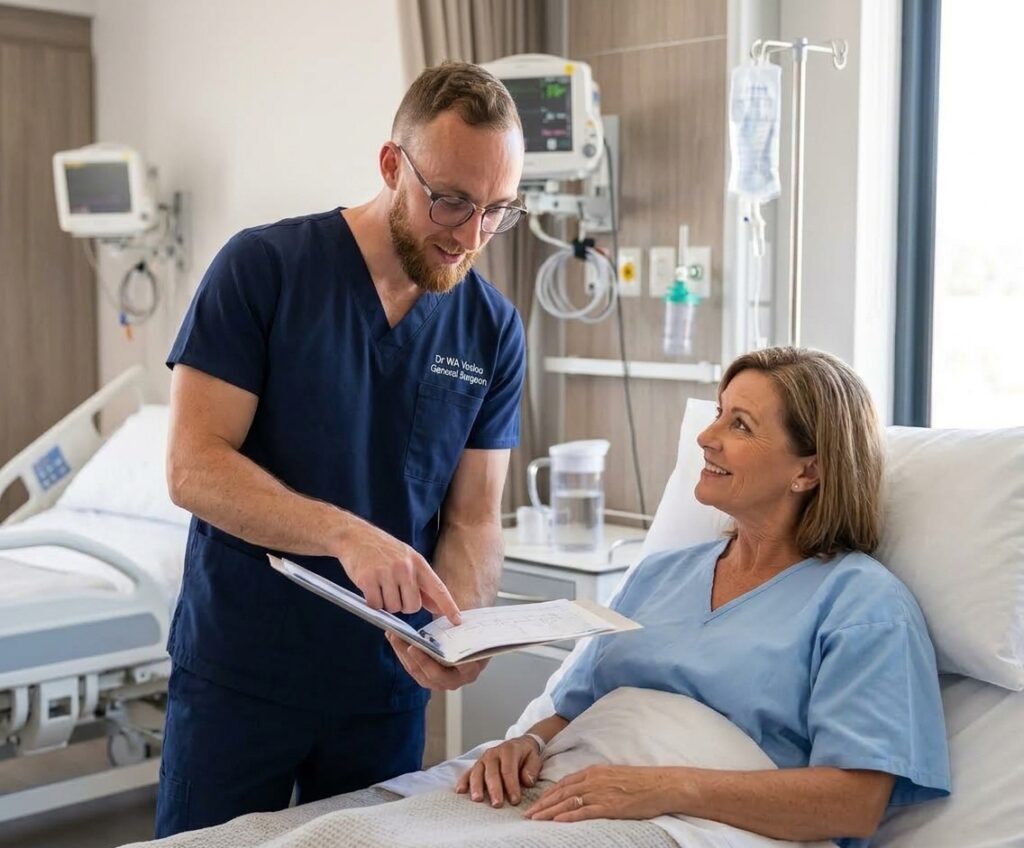
Once you have recovered from the anaesthetic (usually approximately 1 hour), the findings at endoscopy are thoroughly discussed with you, including their significance and the treatment plan going forward as appropriate.
If biopsies or polyps are sent to pathology, final results are discussed once the pathology report is available – usually the following week (average of 5 days for histology turnaround). Follow-up arrangements depend on the findings.
Transport after sedation
As sedation or anaesthesia can impair judgement and coordination, patients should arrange for a responsible adult to take them home after the procedure and should not drive themselves after sedation.
ENDOSCOPY
Frequently Asked Questions
Answers to common questions about preparation, sedation and results for your procedure
Will I be awake during the procedure?
Gastroscopy and colonoscopy are performed with sedation or anaesthesia to improve comfort, so most patients are drowsy or asleep during the procedure and have little to no memory of it afterwards. The exact approach depends on the procedure and your individual assessment by the anaesthetist.
How long does the procedure take?
The procedure itself is usually relatively short, though the exact time varies depending on what is found and whether any treatment, such as polyp removal, is performed during the scope. You should allow extra time before and after for preparation and recovery from sedation.
Will it be painful?
Sedation is used specifically to keep the procedure comfortable. Some patients experience mild bloating or discomfort afterwards, particularly after colonoscopy, which usually settles on its own.
Can I take my usual medication?
You will be given specific instructions about your medication before the procedure. Certain medications, particularly blood thinners and some diabetes medication, may need to be adjusted beforehand – do not stop any prescribed medication unless you have been instructed to do so.
Do I need to fast beforehand?
Yes. Both gastroscopy and colonoscopy require fasting before the procedure so that the area being examined is clear and the airway is protected during sedation. Specific fasting times will be provided ahead of your appointment.
Why do I need to prepare my bowel for a colonoscopy?
A clean bowel allows the lining of the colon to be seen clearly during the examination. Detailed bowel preparation instructions will be provided in advance — following these carefully is important for an accurate result.
Can I drive myself home afterwards?
No. Sedation and anaesthesia can affect judgement and coordination for the rest of the day, so you will need a responsible adult to take you home. You should not drive, operate machinery, or make important decisions for the remainder of the day.
When will I get my results?
Once you have recovered from sedation (usually about an hour after the procedure), the findings are discussed with you, including their significance and the plan going forward. If biopsies or polyps are sent for pathology, final results are usually available within about a week (average 5 days), and any further follow-up will be arranged based on those results.
Where is the procedure performed?
Procedures are generally performed at the in-rooms endoscopy suite, suite 206, Main Hospital, Mediclinic Midstream. In some cases, a procedure may be performed in theatre instead, depending on your clinical condition and anaesthetic requirements — this is decided individually in consultation with the anaesthetist.
What should I bring with me?
Please bring a form of ID, your medical aid card, a referral letter (if applicable), a list of your current medication, and any relevant previous scans, reports or scope results.